

Interviewed by Meaghan Sullivan, Google Workspace Marketing Customer Programs Lead
Tell us a bit about yourself! Who are you, where are you from and what do you do?
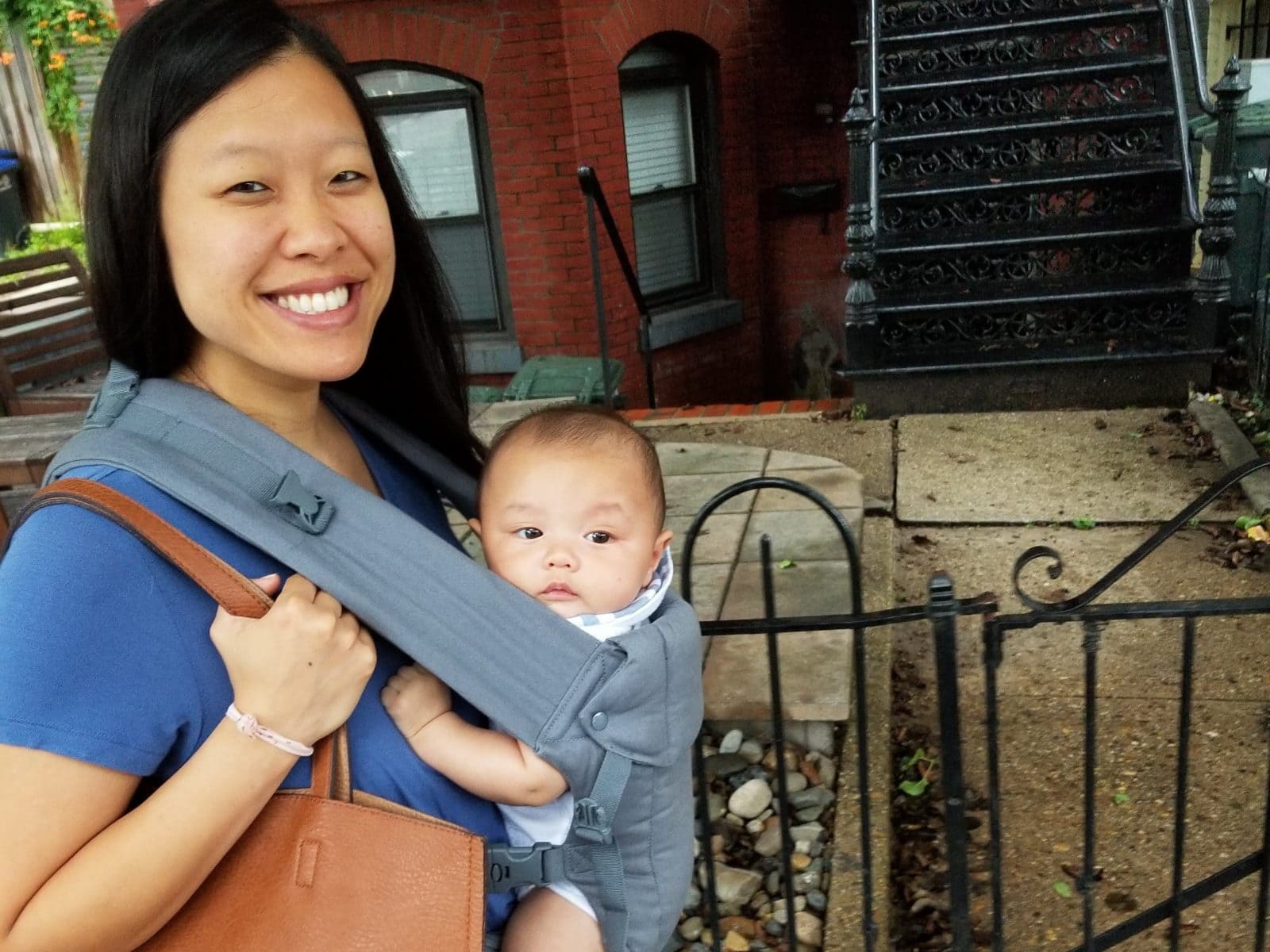
Hey there, Aunt Flow fam! I’m Michelle, co-founder and CEO at Josie—a startup dedicated to giving everyone a hype team for parental leave. Think of us as your personal cheerleaders during one of life’s most exciting (and challenging!) journeys. I’m based in Washington, DC, where I live with my husband Mike and our two adorable yet undeniably crazy kids. As a proud daughter of Taiwanese immigrants and a self-proclaimed recovering healthcare management consultant, I’m all about blending my cultural roots, professional experience, and passion for supporting parents into my work at Josie.
Can you tell us the story of your first period?
Ah, the classic first period story—seared into our memories forever, right? Mine happened when I was 13, at a friend’s pool party. As I was changing out of my swimsuit, I noticed the blood and felt a mix of fear and relief. Fear because, well, it was something new and unfamiliar, and relief because it finally happened, and I discovered it in a private setting (thank goodness for small mercies!). It’s wild how a single moment like that can stay with us for years to come.
What are some misconceptions you had (or still have) around periods?
In my journey as the co-founder of Josie, a company focused on the period (pun intended!) surrounding parental leave, I’ve come to realize that there are many misconceptions and unaddressed questions about our periods during this time. The postpartum phase brings a whole new world of menstrual mysteries. Questions like, “When will my period return after giving birth?”, “Does childbirth change anything about my menstrual cycle/when can I get pregnant again?”, “Will I experience pain?”, and “How can I best manage my postpartum period?” are common, yet they’re often overlooked. After birth, the typical protocol is a single OBGYN visit at 6 weeks, and nothing more. With everything going on, it’s a bit head-scratching. There is so much attention on our baby (rightly so) during this time – but we ALSO need to shine a spotlight on moms and their health needs too!
Do you believe that periods should be discussed in the workplace? Why or why not?
Absolutely, it should be a topic that’s open for discussion if an individual feels comfortable doing so. Creating a psychologically safe environment where employees can freely share their experiences, concerns, and even the awkward moments associated with periods is essential. In addition, parental leaves are so inconsistent depending on where you work and live – so every individual’s experience can be vastly different. That’s why being vocal about bleeding and menstrual needs during the return to work period is so important for building a culture of inclusivity and compassion. By normalizing these conversations, organizations send a powerful message that they value authenticity and create a culture where everyone can show up fully.
It’s also just good business sense. Studies show that organizations with psychologically safe environments consistently outperform those without. According to a Google study (Project Aristotle), psychological safety is the number one factor that determines the effectiveness and overall success of a team. Their research revealed that teams with high psychological safety were more likely to harness the power of diverse ideas from their teammates and be rated as highly effective.
How can organizations create a supportive and inclusive environment for employees to talk about menstruation at work?
In my work at Josie, I’ve had the honor of working with so many orgs that put their employees first and show up for them – especially during the “moments that matter.” Here’s the bottom line: it’s the small, everyday interactions that will either add up to something awesome or something lame. So:
- Give your managers tools to show up with empathy in the small (and big) “moments that matter.”
- If you’re a leader, tell your own period stories – and other stories when it comes to women’s health, which never gets talked about. Let’s collectively start normalizing and supporting one another in these challenges!
- Install an Aunt Flow dispenser! (In all seriousness, a visual cue like this sends a powerful message that your organization cares about its employees’ well-being and understands their needs. It’s akin to companies providing just those few extra touches in pumping rooms – e.g., extra supplies, sound machines, and cozy chairs. (P.S. Aunt Flow, if you’re reading this, consider strategic partnerships with companies that outfit pumping rooms—Claire Coder, let’s chat!) 😉
What advice would you give to individuals who feel uncomfortable discussing their menstrual health or needs with their employers or colleagues?
Trust your gut (uterus?): If you don’t feel comfortable discussing your menstrual health or needs with your employers or colleagues, you don’t have to disclose anything. It’s okay to be discreet and simply say, “I need to step away for a moment,” when experiencing cramps or needing some time off. Remember, you don’t have to over-explain yourself.
Reflect on your discomfort: Take a moment to understand the root cause of your unease. Are you a naturally private person, or is your work environment not as supportive as you’d like it to be? This self-awareness can guide your future actions.
Start small: If you want to open up about your menstrual experiences but feel hesitant, begin by confiding in a trusted inner circle of peers or colleagues. Sharing your story with a supportive group can help build your confidence and create a foundation for broader discussions in the future. It’s akin to telling people at work you’re pregnant – so many parallels to our work at Josie, I’m loving this interview!