
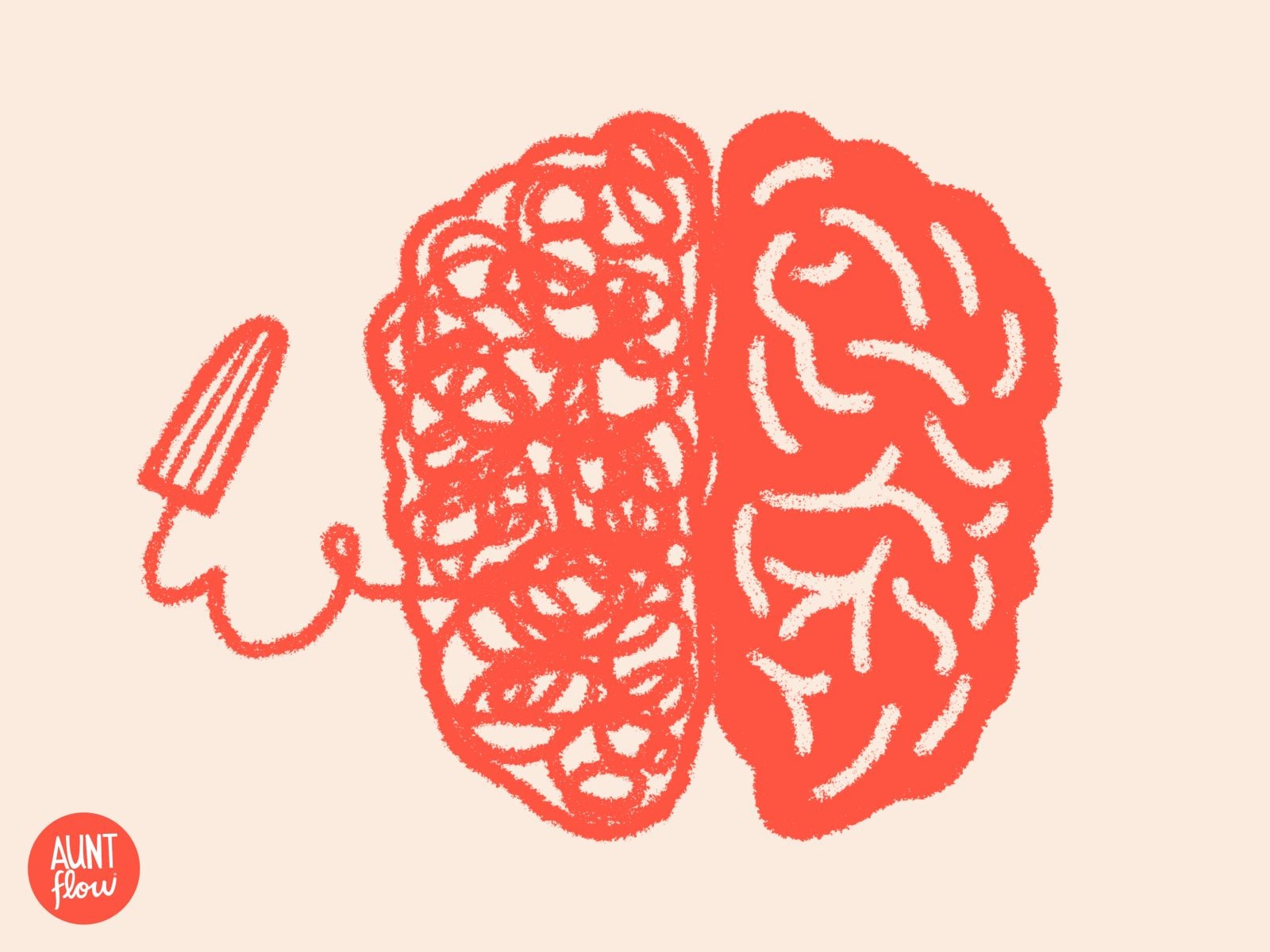
Many menstruators are well-acquainted with the rollercoaster of emotions that come with menstruation. While physical symptoms like cramps, bloating, and fatigue are well-documented, the connection between periods and mental health is less often discussed.
So, can periods truly affect your mental health? The answer is a resounding “yes.”
The Influence of Your Hormones
To understand the link between periods and mental health, we must dive into the hormonal fluctuations that occur throughout a menstrual cycle. Two key hormones, estrogen, and progesterone, play a central role in regulating the menstrual cycle and have a profound impact on mood.
- Estrogen: This hormone tends to be at its highest levels during the first half of the menstrual cycle (the follicular phase). It’s associated with increased serotonin, the “feel-good” neurotransmitter. As estrogen levels rise, you might experience improved mood, energy, and a generally positive outlook.
- Progesterone: Progesterone levels increase during the second half of the menstrual cycle (the luteal phase). This hormone can have a sedative effect, leading to feelings of relaxation but also potentially contributing to fatigue and mood swings.
Mood Swings and PMS
Premenstrual Syndrome (PMS) is a well-documented phenomenon experienced by many individuals in the days leading up to their periods. PMS can bring mood swings, irritability, anxiety and even depression for some. These symptoms are largely attributed to the hormonal changes mentioned earlier.

For some people, the severity of PMS symptoms can be quite disruptive to their daily lives. It’s essential to recognize that PMS is not “all in your head.” It is a real and sometimes challenging aspect of menstruation that can impact your mental health.