
This past year, the nonprofit organization Justice Necessary conducted a 2024 study involving 1,256 women across Colorado to assess the prevalence and impact of period poverty, diaper need, and hygiene poverty. This research, building upon the same 2022 survey, reveals a concerning escalation in period poverty over the two-year period, highlighting the urgent need for intervention and support.
Period Poverty
Period poverty has become an increasingly urgent issue in Colorado, with significant growth in the number of women affected. The data illustrates a troubling rise in period poverty across diverse demographics, with women of color disproportionately affected. Systemic inequities, compounded by financial barriers, have left these communities particularly vulnerable. Rising housing costs, stagnant wages, and healthcare expenses have worsened financial hardships for many households, exacerbating the issue at hand.
Who is Impacted by Period Poverty?
The study found that 53% of menstruating women experience period poverty, marking a 10% increase from 2022. This means over half of the respondents struggle to afford menstrual products, leading many to extend the use of products beyond recommended times or resort to unsuitable substitutes, therefore increasing health risks.

Unexpected Periods and Access to Menstrual Products
When women get their period in public without access to period products, they often have to use substitute items, buy costly products on the spot or leave work or school to retrieve supplies from home.

Use of Substitute Products and Extended Use
Using period product alternatives like toilet paper, paper towels, or other makeshift materials is not only ineffective but also poses serious health risks, including irritation and infection. Additionally, it can heighten feelings of shame and frustration.
The survey revealed that 75% of women were forced to “macgyver” a tampon or pad out of toilet paper or something else. 48% used a period product for longer than recommended in order to conserve supplies.

Barriers to Accessing Period Products
Access to period products remains a significant challenge, with barriers extending beyond financial limitations. In 2024, the lack of awareness about available resources and transportation issues emerged as the most pressing obstacles.
Making matters worse, restrictions on programs like SNAP and WIC prevent them from covering these essential items. Alarmingly, more women now struggle to access period products compared to the 2022 study, highlighting a growing and urgent need for support.

The Supplemental Nutrition Assistance Program (SNAP)
The Supplemental Nutrition Assistance Program (SNAP) does not cover the cost of period products. Yet, a woman needs approximately 330 products annually, which can cost up to $1,800 a year.
Without access to these essentials, maintaining work, attending school, and fully engaging in daily life becomes challenging, creating major obstacles to dignity and opportunity.
Over the past two years, Colorado has seen a significant 10% increase in women’s ability to access essential period products.

Mental Health
The inability to afford period products results in a decline in women’s mental health and confidence. Since the 2022 study, more women have had to adjust their schedules or struggle with performance at work due to a lack of access to period products.
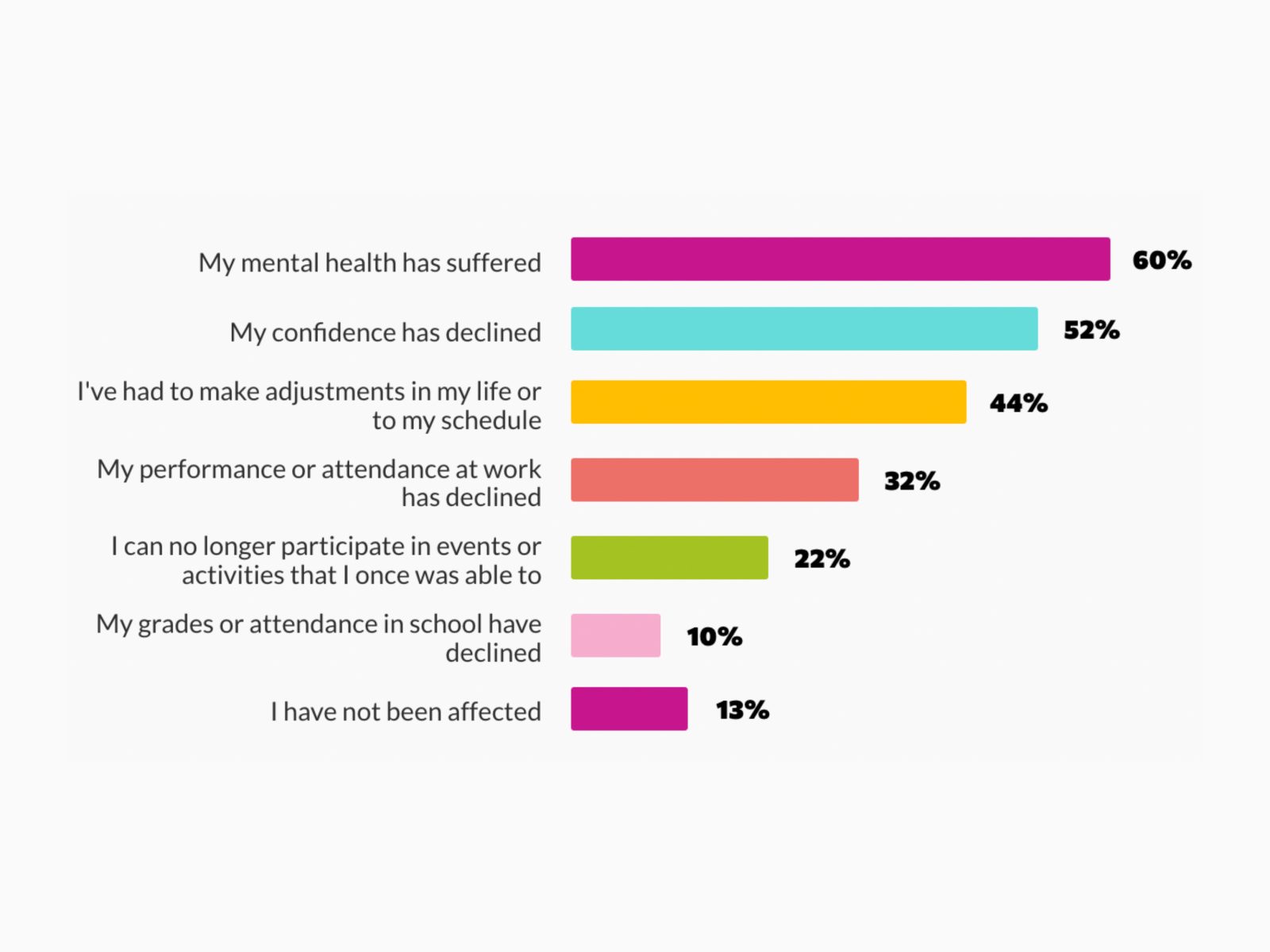
The lack of access to period products continues to impact mental health and confidence, triggering a range of negative emotions. Since the 2022 study, feelings of embarrassment and shame have significantly increased.

Daily Life and Activities
Women experiencing period poverty are more likely to adjust their schedules or struggle to perform effectively in daily activities, education, or work.


Improving Access & Additional Resources to Fight Period Poverty
HB24-1164: Free Menstrual Products in Schools
On June 5, 2024, Governor Jared Polis signed HB24-1164, “Free Menstrual Products in Schools,” into law, guaranteeing free menstrual products for students across Colorado.

The first milestone: By June 30, 2025, every school must stock at least 25% of their female and gender-neutral restrooms with period products. Additionally, the other 75% of restrooms must have clear signage directing students to where these products are available.
Now that legislation has passed, Justice Necessary has put together a Support & Resource Toolkit for schools to successfully implement HB24-1164 and provide free period products to their students.
Find Your Pantry
In response to these findings, Justice Necessary created Find Your Pantry, a tool that connects individuals with nearby organizations providing Aunt Flow organic cotton period products. The best part? All you have to do is enter your zip code.
Find Your Pantry also acts as a resource hub, helping people locate hygiene products while allowing volunteers and donors to partner with local agencies in need of products, assistance or financial support.

PeriodPalooza
The Colorado nonprofit will be hosting a series of packing events across the state in May! PeriodPalooza will be a hands-on event where volunteers unite to assemble one-month period kits.
This year, Justice Necessary has a game-changing goal to pack and distribute 1 million period products to Colorado students in need, making it the world’s biggest donation of period products!
In the area? Find out when Justice Necessary is hosting a packing party near you and get involved in this year’s PeriodPalooza!