
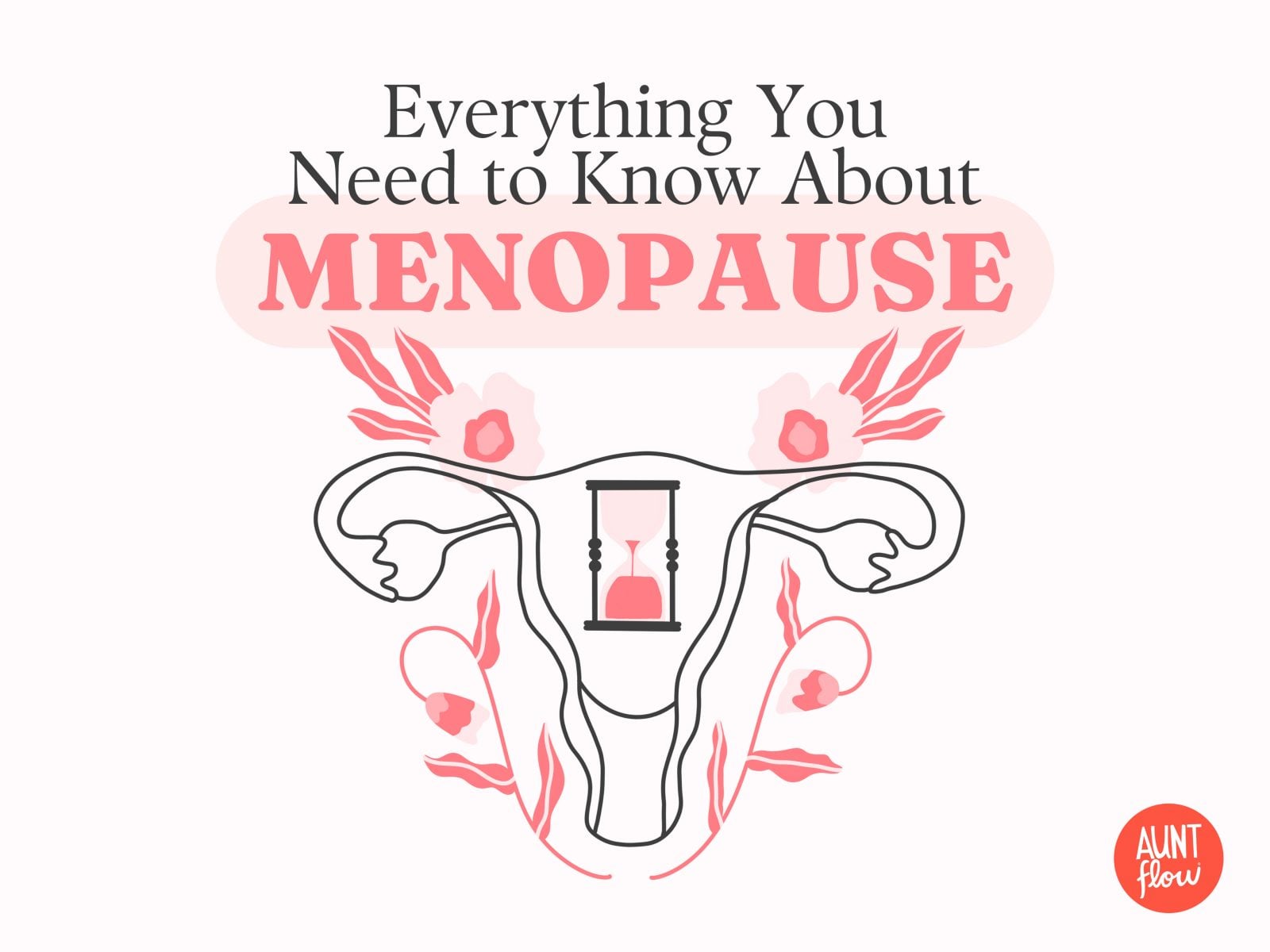
At Aunt Flow, we talk a lot about puberty and periods but not a ton about menopause. This natural process marks the end of one’s period, a.k.a, their reproductive years. While it can bring about a range of changes, it’s essential to have the facts about this significant stage.
What is Menopause and When Does it Occur?
Menopause typically occurs between the ages of 45 and 55, though it can happen earlier or later. It’s defined as the end of menstrual cycles for 12 consecutive months. While menopause is a biological event, its effects can extend to emotional, mental, and physical aspects of a woman’s life.
The 3 Stages of Menopause
- Perimenopause: This stage precedes menopause and can start several years before periods cease. Hormone levels, especially estrogen, begin to fluctuate, leading to irregular periods and various symptoms.
- Menopause: Once a woman has gone without a period for a year, she officially enters menopause. Hormone levels continue to decrease, leading to changes in the body and potential symptoms.
- Postmenopause: This stage begins after menopause and spans the rest of a woman’s life. While some symptoms may persist, many women experience relief from certain discomforts.
Common Symptoms
During menopause, the body experiences a series of changes due to declining hormone levels, particularly estrogen and progesterone. Some common symptoms include:
- Hot Flashes and Night Sweats: Sudden waves of heat and excessive sweating, often disrupting sleep.
- Vaginal Dryness: Reduced estrogen can lead to vaginal dryness and discomfort during intercourse.
- Mood Swings: Hormonal fluctuations can cause mood changes, irritability, and even anxiety or depression.
- Sleep Disturbances: Night sweats and hormonal changes can impact sleep quality.
- Bone Health Concerns: Decreased estrogen may lead to reduced bone density and an increased risk of osteoporosis.