
Original article written by Itzwl Chavero
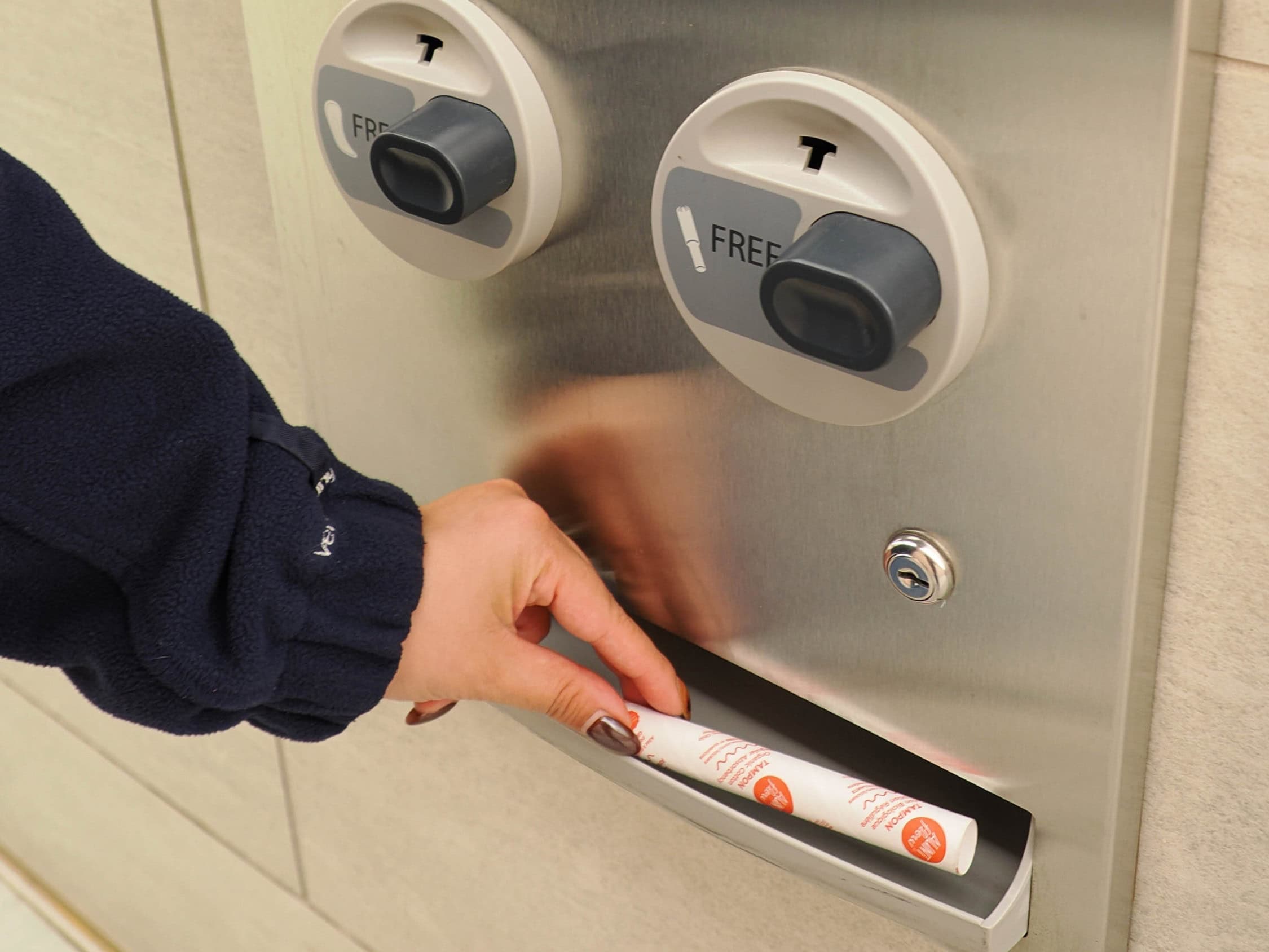
What seemed to start as a final class project has now turned into the welcoming of brand new menstrual product machines across campus bathrooms.
Lack of access to menstrual hygiene products, also known as period poverty, is a global issue that leaves individuals struggling to afford or gain access to menstrual products.
According to a study by BMC Women’s Health, one in 10 college students in the United States experience period poverty or have no access to menstrual products when necessary.
Naomi Moreland, a senior majoring in nursing and co-creator of the project, recalled working with a non-profit organization in Little Rock, Arkansas, to donate 7,000 free period products to domestic violence and homeless shelters.
It made me solidify that I want to do something with women’s health [and how that] relates to nursing. I knew I loved this project and wanted to bring it back [to Dominican] because there’s period poverty everywhere. It’s not just [in] one state or city.
Naomi Moreland
That experience served as motivation to build a similar project at Dominican and keep advocating for period poverty awareness.
Through the personal funding of John DeConstanza, former vice president for Mission and Ministry, and working as an intern in ministry, Moreland managed to place new menstrual hygiene products in the two gender-neutral and women’s restrooms in Lewis Hall.
Debra Kash, director of auxiliary services, expressed her support for expanding the renewal of period product machines in all women’s and gender-neutral bathrooms on campus.
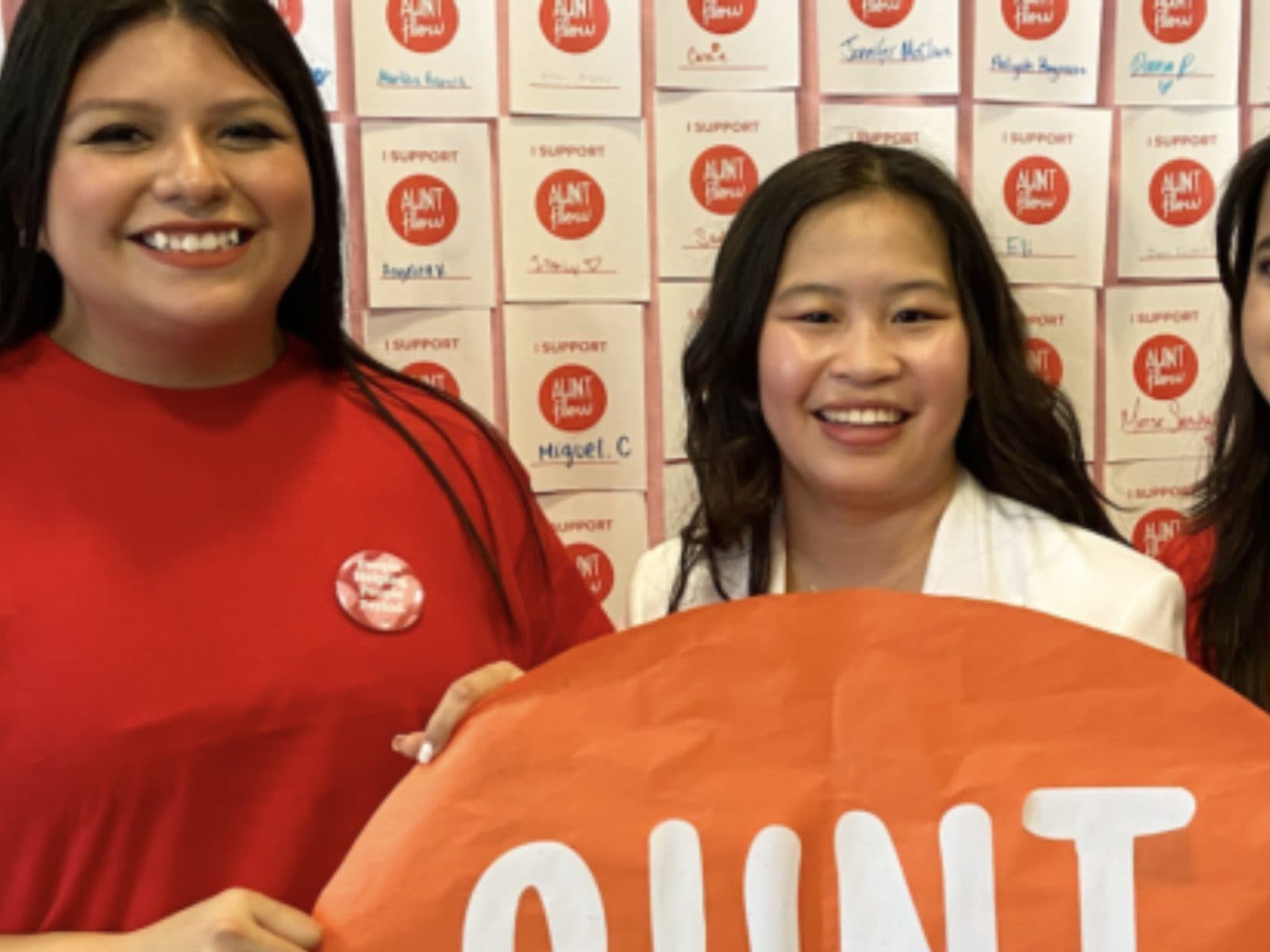
Kash then partnered with Moreland, Lesly Salguero, a senior double majoring in accounting and finance, and Kiara Valenzuela, a senior majoring in marketing, to renew period products as part of a final marketing project. By visiting each woman’s bathroom on campus, they realized most of the products there were old.
As part of their project, they sent surveys to courses and several student organizations to ask if students were pleased with the menstrual products already provided in bathrooms. The results showed that students were not pleased with the products.
After several discussions and plans, a total of 27 free period product machines were installed in gender-neutral and women’s restrooms across campus through a partnership with Aunt Flow.
This process was made possible not only by the dedication of the creators but also by the funding support of Tina Taylor-Ritzler, professor and chair of the psychology department, and the DeConstanza family.
The initiative’s founders also want to use this project to promote inclusivity toward anyone who uses menstrual products and supplies period products in gender-neutral restrooms.
The project founders are proud to see the brand new period product machines in Dominican bathrooms, and they encourage other students to advocate for what they feel passionate about.
Finding mindfulness in other people makes it easier for you to make an actual change and see the long-lasting effects of what you created. [It also happens with] the friendships and connections that come from it.
Lesly Salguero
The student founders will also be creating menstrual packages, which will provide a menstruator with enough supplies to last a month.
With the efforts to expand the products’ availability to DU Feeds and the Wellness Center, Dominican advisors will be able to supply them to menstruators in need.
“They can take it home or use it to support their families if they’re having accessibility or financial issues,” Moreland explained. “We wanted to make it a holistic thing.”
Students like Giselle Valdez, a junior majoring in finance, expressed their support for modern machines and period products in bathrooms.
“I am so excited about this initiative,” said Valdez. “It is important for students to receive free period products, especially when you might need one and don’t have it.”