

Updated 4/15/2026
The impact of period poverty—the lack of access to menstrual products—is a very real issue among students.
The growing momentum to address menstrual equity and reduce the impact of period poverty has spurred not only legislative intervention but also much-needed research surrounding university-led initiatives to offer free menstrual products for students.
The State of the Period 2025 Study unveiled the following statistics that show the impact of period poverty on menstruating students in the US:
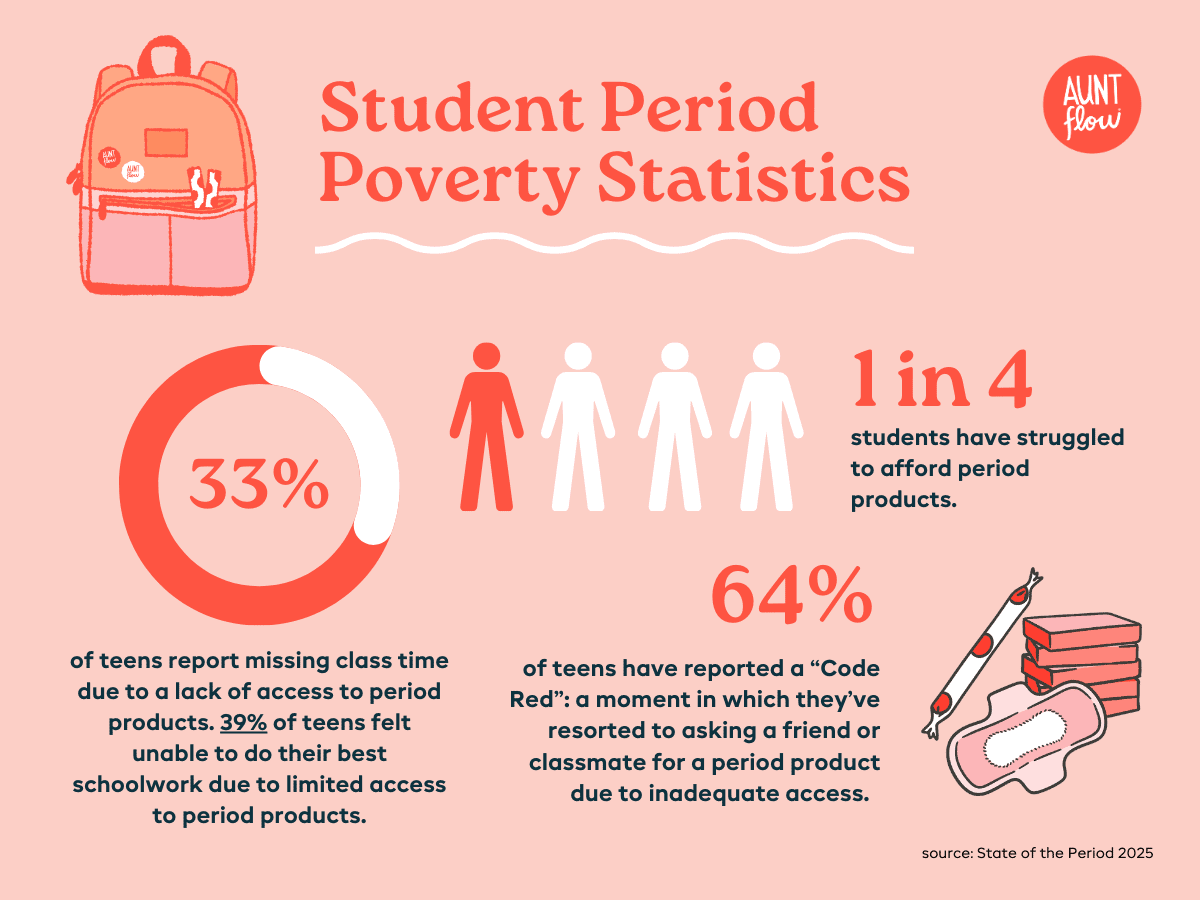
- 1 in 4 students have struggled to afford period products.
- 1 in 3 students report missing class due to a lack of access to period products.
- 39% of teens felt unable to do their best schoolwork due to limited access to period products.
- 45% of teens admit to wearing a period product longer than recommended due to not having accessible products, while lower-income (53%) and Hispanic teens (52%) report experiencing this more frequently.
- 64% of teens have reported a “Code Red”: a moment in which they’ve resorted to asking a friend or classmate for a period product due to inadequate access — a six-point increase from 2023.
- 93% of teens have endured negative experiences participating in sports or extracurricular activities because of menstrual cycle symptoms.
- Nearly 6 in 10 (59%) of teens have felt personally affected by the negative association surrounding periods.
- 75% of teens agree that there is a negative association that periods are gross and unsanitary.
- 62% agree that society teaches people to be ashamed of their periods.
- 86% of teens agree that lack of access to period products is a critical issue people face.
- 45% of Black teens express that overall economic pressure on their family has affected their period product purchasing habits.
- 42% of teens report having easier access to free WiFi than to free period products weekly.
Most schools keep menstrual products in the school nurse’s office. Students can get a period product for free but will have to walk across the campus while bleeding.
Pads and tampons should be provided in restrooms, making them easily accessible to ANYONE who needs them and helping to combat the impact of period poverty. By doing this, schools can improve attendance and empower students with their education!