
Disposing of period products might seem simple, but do not just flush them down the toilet or toss them wherever you find space. Knowing how to dispose of your used period care products properly helps protect plumbing, keeps restrooms hygienic for everyone and respects janitorial staff. Here’s how it works. 👇
Why Proper Period Product Disposal Matters
Unlike toilet paper, most period products don’t break down in water. Their absorbent design is meant to hold liquid, not dissolve once flushed. That means toilets and sewage systems can clog, leading to plumbing problems, costly repairs and even environmental harm when products reach water systems.
So yes, even when that toilet may seem like the easiest route, it’s not worth it.
Step-by-Step: Proper Period Care Disposal
1. Wrap the used product
When you’re done with a tampon or pad, start by wrapping it up. You can use:
- The wrapper from a fresh pad or tampon (if available)
- Toilet paper or tissue
- Or a disposal bag if the restroom provides one.
This keeps everything discreet and sanitary before you take it to the bin.
2. Check for a Disposal Bag in the Stall
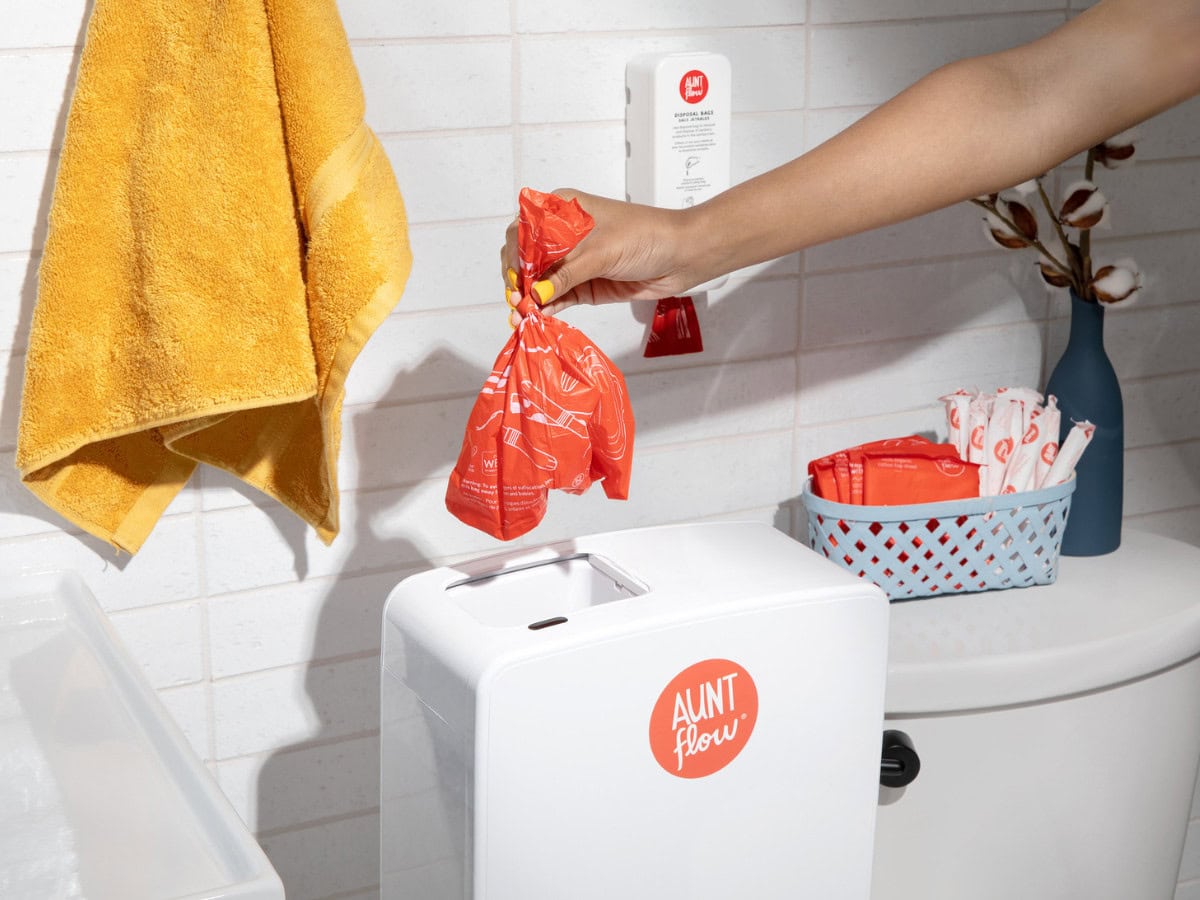
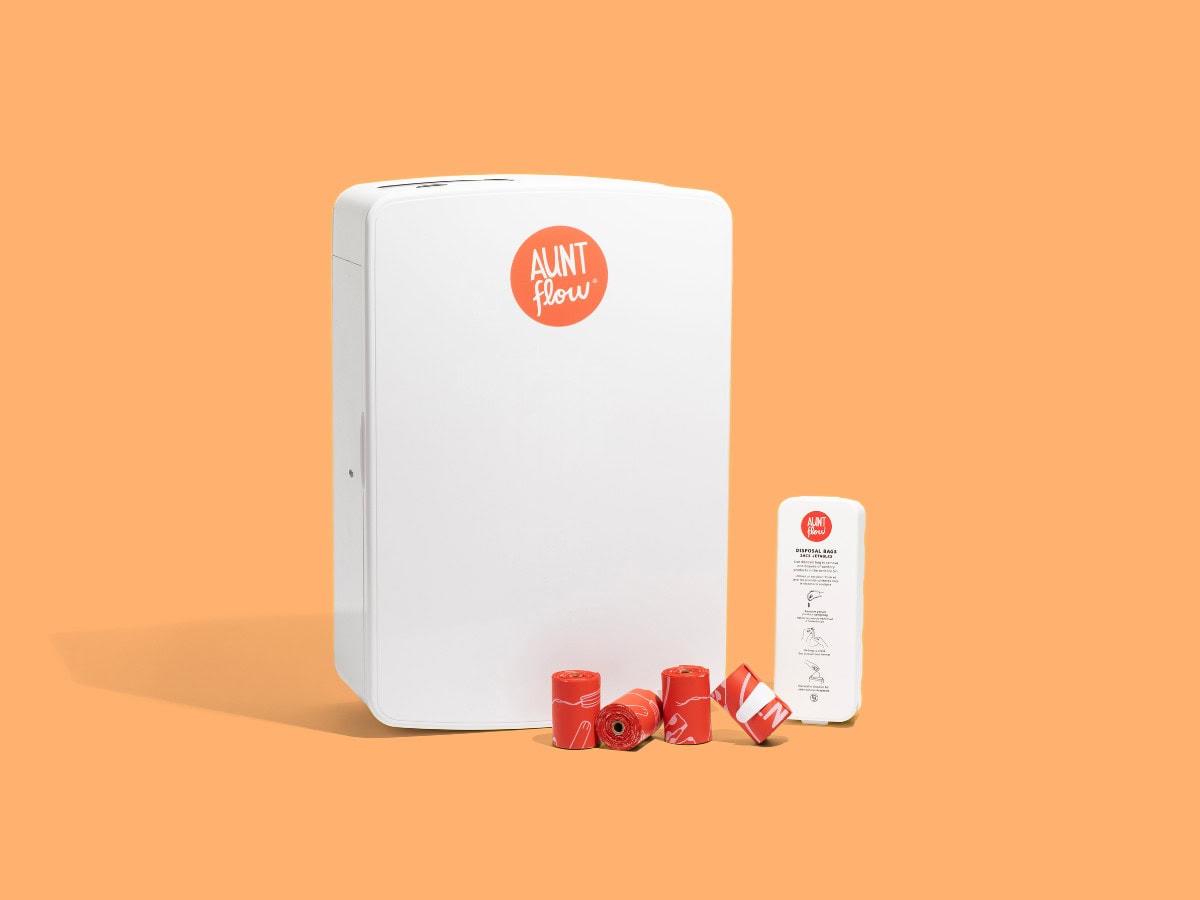
Increasingly, restrooms (especially in schools, workplaces and public facilities) provide disposal bags right in the stall. These products are meant to make disposal clean and discreet. They work like this:
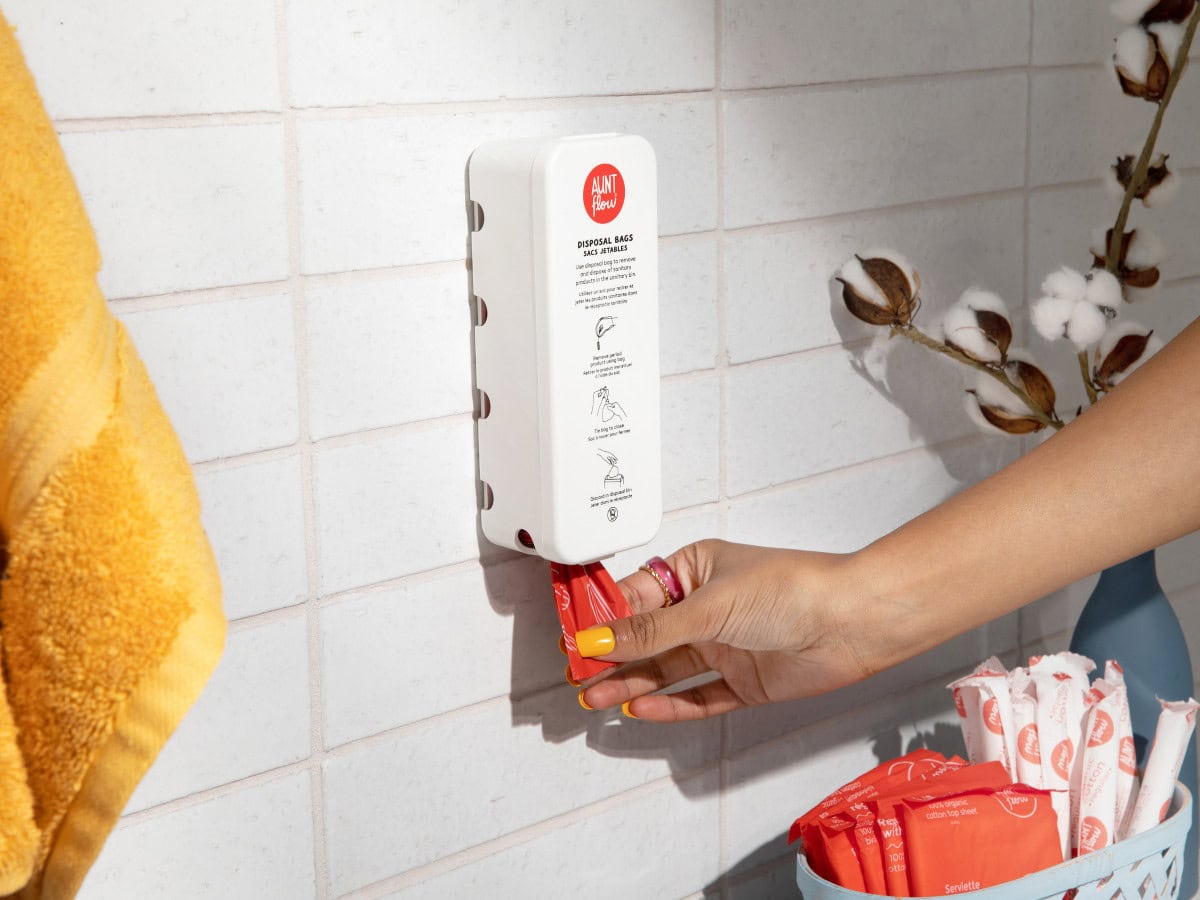
- Pull a bag from the disposal bag dispenser (usually near the toilet).
- Open it completely, either slide it over your hand like a glove or hold it open.
- Place the wrapped product inside, keeping your hands clean.
- Tie the bag off securely to seal in odor and reduce exposure to fluids.
- Drop the tied bag in the designated trash receptacle.
Disposal bag dispensers often have simple graphics right on them to guide users.
These plant-based, biodegradable bags are sized to fit most period products like pads, tampons, liners and applicators, and are a huge upgrade from old metal bins with no liner (especially when paired with a touch-free disposal unit in the stall to avoid those gross bins altogether!).
3. If There’s No Disposal Bag Dispenser Available
Not every restroom has bag dispensers yet (though it’s becoming more common!), so fall back on the basics:
- Wrap the used product in toilet paper or the wrapper from a new tampon or pad, if available.
- Drop it in the nearest trash receptacle.
Should You Ever Flush? (Short Answer: No 👎)
Definitely skip flushing period products, even if it seems like a small or harmless thing to do. Because tampons and pads are designed to absorb, they can expand and snag inside pipes, leading to blockages in bathrooms and sewage systems. This is a plumbing headache and poses a threat to the environment by polluting our waters.
Bonus Tips for Restrooms That Offer Bags
Here’s how disposal bags usually look and work, and how you might teach people to use them:
💡Look for a small dispenser on the stall wall. You’ll usually see a graphic showing how to pull and tear a bag at a perforation.
💡 Think of the bag like a glove you put your hand in — this helps remove the product without touching it directly.
💡 Tie it up! Once you’ve placed your used product inside, knot the bag to keep the contents contained.
💡 Place it in the nearest trash receptacle.
These bags not only help keep the restroom fresh but also reduce the risk of exposure to bloodborne pathogens for cleaning staff and users alike.
Why This Makes Bathrooms Better for Everyone
Proper disposal systems, like Aunt Flow’s complete menstrual hygiene disposal system, go beyond convenience. They:
- Prevent clogged toilets (saving facilities time AND money)
- Cut down on odors and unsanitary conditions
- Make menstrual care management less stressful and more sanitary
- Protect maintenance staff by reducing direct contact with used products
That’s your Period Care Disposal 101! Want people to really get it? Consider pairing signage in the restrooms so folks know exactly how to properly dispose of period care. It’s a small step that makes a big difference for hygiene and safety in public spaces.