
“I don’t know how to use a tampon,” the words that led me to start the Have the Talk Now campaign, which hosts puberty workshops to help younger children and their parents learn how to have the talk together.
“I had missed my math exam,” the words and experience that led me to start the New York City Menstrual Equity Coalition, testify, and be an intern for Period Law because I couldn’t find a pad in the bathroom due to poor policy implementation.
Hearing the words, “I couldn’t afford both baby diapers and pads today, so I bought the diapers and crafted a pad out of toilet paper at work,” led me to start a chapter called PERIOD @ Queens NY where we do monthly period drives.
These initiatives, which showcased my leadership, all derived from personal events. Each began as something that affected me directly and led to impacting the lives of others.
The story I’m delivering today is the backstory to the grassroots work I’ve done surrounding menstrual advocacy.
Let’s start From 2021
During my freshman year, I was 13, excited to start high school and navigate the F train station on my own for the first time. It felt like my first taste of profound independence. I kept glancing at Google Maps to ensure I was heading toward Manhattan, not Jamaica, my mom’s voice whispering and echoing: “Read the signs. Keep your eyes open .” When I looked up, I realized I was on the wrong side—Jamaica-bound.
The screeching of the train took me by surprise, and the gust of wind blew my hair across my face as a rat ran by my feet. Panicked, I leaped onto the train just as the doors closed behind me. Wrong train. My mom’s words returned: “If you take the wrong train, just get off at the next stop and switch sides.”
I got off at the next station and hurried up the stairs to the Manhattan-bound platform. The place was strangely quiet at 7 a.m., unfamiliar and empty, and I had a tight feeling in my chest. As I waited, I saw a woman at the top of the stairs with a baby stroller. She struggled to collapse the stroller while carrying her baby, so I rushed up and offered to help. She nodded, and I carried the stroller down the stairs while she followed with the baby in her arms.
The train arrived just in time, and we got on together. That’s when the life-changing conversation happened.
She thanked me for helping and told me about her hard day struggling with the basic necessities of life. She was a single mother, dropping her baby off at daycare before heading to work. Although I don’t remember everything she said, one detail still stuck with me to this day: “I couldn’t afford both baby diapers and pads today, so I bought the diapers and crafted a pad out of toilet paper at work.”
I stared at her in shock and asked, “How do you craft a toilet paper pad?” She reached into her pocket, pulled out a napkin, folded it, and handed it to me. “This keeps me going through the day,” she said, stating that she constantly ran to the bathroom to make another.
Privilege was the first word that came to mind. Although my family came from a harsh background and struggled in an immigrant household, I had never had to worry about this.
Two months later, when I found myself in the school bathroom during a math exam, trying to craft a pad out of toilet paper because there were no products, her story came flooding back. That was the start of PERIOD @ Queens NYC. Using the help of the PERIOD. organization, I was able to host period drives monthly for the past few years.
Her experience, as well as my own experience crafting a pad, gave me the idea to create a community that donates menstrual products and raises money to ensure others don’t have to choose between buying diapers and pads. Through the stories of others—students caught without a pad, women forced to sacrifice basic necessities—I began to understand that this wasn’t just a personal problem; it was the issue of many other women. It was a systemic issue.
The End of 2021-2022
One day, I asked my math teacher if I could use the bathroom because I felt uncomfortable, I did not know I was bleeding. I went to the bathroom and saw that my underwear was covered in a bit of blood. In a pinch, I used a napkin on top of the blood so it would leak on the napkin rather than the underwear. I came out of the stall to see that no one was in the bathroom at this time, so I couldn’t ask anyone if they had pads.
Luckily, I went outside and saw my friend going into the bathroom. I told her that I was bleeding and asked if she had pads. She had to go back to the math room to get pads, and the teacher asked, why are you going out again if you just went out to the bathroom? She said the principal had stopped her and asked her for specific documents. Not only did she have to lie about something that should be considered normal and not considered uncomfortable to talk about, but she also had to miss out on more time in class because I needed help. It was my freshman year of high school; I didn’t know only one of the bathrooms on the 6th floor provided pads, and the others didn’t. I didn’t know I could ask the main office for pads as well to make my life easier and so I would not miss out on important class time.
Later that year, during summer, I learned that the main office now provided pads and tampons. I was volunteering to help out in the summer for the incoming freshmen in our school; it was a program to help them get settled into the way Bard works. It was independent study time where they caught up on homework that the school provided them. A girl came up to me and pulled me aside to whisper, “Alisa, do you have a pad? I’m on my period.” I took her to the 6th-floor bathroom and checked one of the bathrooms to see if there were pads. There were none.
I then went into the main office to look for the program advisor, and I asked if we had any pads. She looked at me and opened the drawer in the main office; I was stunned. I didn’t know I could’ve just asked them rather than ask a bunch of girls who passed the restroom. My program advisor also pointed across the room to the bathroom I don’t normally go to and said, “There are usually pads in that bathroom.” It had been one year and one summer since I realized that my school provided pads and tampons and that the main office provided menstrual products. So why did it have to take me this long to figure that out?
My school has not been providing menstrual products either at all or in a way that is actually helpful to students who menstruate. Myself and my classmates have experienced missed class time, shame about menstruation, anxiety and helplessness because of the poor implementation of the menstrual product access laws that New York City claims to have, causing me to meet incredible advocates who helped me testify to the city council.
Inspired by the effort of the Alabama Coalition created by Regan Moss, I approached her to ask for suggestions and guidance in creating the New York City Menstrual Equity Coalition.
Seeing the lack of policy changes and the incredible groups of advocates who testified led me to reach out to advocates and organizations such as PERIOD., Period Law, and others to formulate a coalition with many different individuals to come together monthly on ways to improve menstrual equity.
2023
I was in the middle of P.E. class, where we had a substitute. My group of friends and I were conversing about our bodies. We all jokingly questioned, “Do we have two or three holes in our bodies?”. Laughing, we all shrugged. We continued to laugh at how we don’t even know how many holes are in our bodies and I brought up the fact that I don’t even know how to use a tampon because of the uncertainty of the way my uterus works. In the end, we had a serious moment in which we all expressed how embarrassing it is that we don’t understand how our body works and we should’ve learned this earlier. This lingered in my mind for a while.
A few weeks later, I had a call with a menstrual advocate, Marni Sommer who spoke about her experience with the GATES program and their creation of a children’s book, it reminded me of the conversation I had with my friends and my mind went straight to: how can I use these resources to promote education in schools? I then remembered how it wasn’t just my school that didn’t teach me much about my body, but my parents. It starts with what you’re told, and if your parents don’t have the resources, time, or even know how to give the talk, that’s where the root of the problem is. With just one call, I created a Have The Talk Now Campaign for students on education about their bodies, parents on how to give the talk, and getting puberty books in libraries using the help of Columbia GATES and Isabella Brocato, a grad student at Columbia.
2024
The year where I took my policy advocacy and ran with it. I wanted to learn more about the period policies in NYC, so I conducted an independent research project to understand NYC high school students’ experiences within their own schools.
Through this, I realized that the NYC policies were not doing their job, and I continued to work on policy efforts, especially through interning with Period Law.
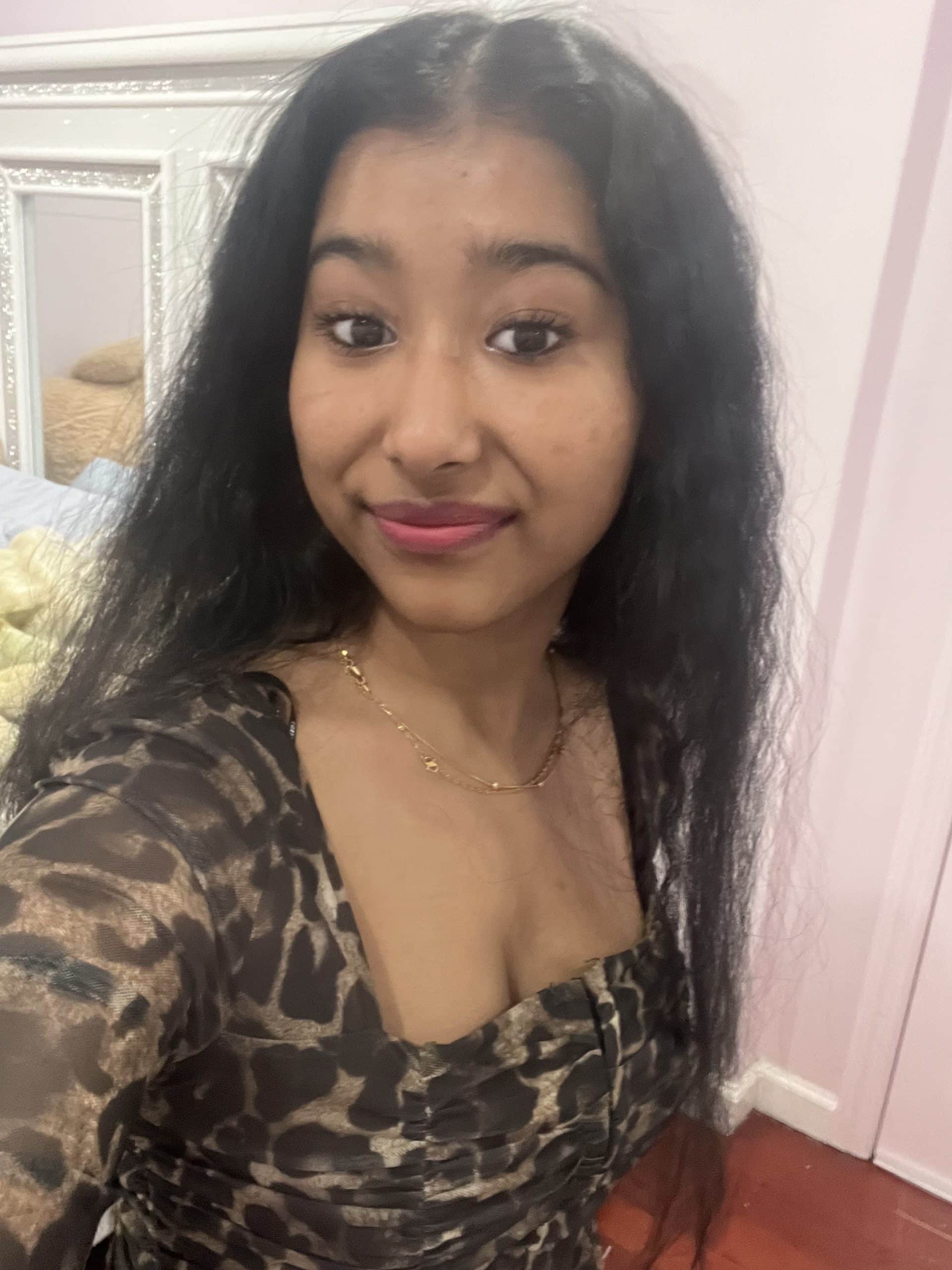
Now, as a senior in high school, I’m no longer the one who has to reach out to “professional” advocates. I soon realized that people, especially high school students, look up to me as that kind of advocate. I’m excited and happy to give back the mentorship and support I’ve gotten throughout the years while continuing to work on advancing menstrual advocacy.