

Original article written by Sophia Finkbeiner
Millions of women in the United States are unable to afford proper menstrual care products during at least one menstrual period of their lives. This issue, known as period poverty, is the limited or nonexistent access to menstrual hygiene products because of financial constraints. Consequences extend beyond inconvenience and affect daily life, work, and mental health.
On college campuses, where students face rising tuition and necessities costs, access to menstrual products can be a challenge. A 2021 study of U.S. college students found that 14.2% could not afford menstrual products at some point in the past year, and 10% could not afford them every month. Period poverty is also more common among historically marginalized students, such as students of color, immigrants, and first-generation students.
Period Poverty at Tulane
Baleigh Evans, assistant director of health promotion, said that as Tulane University’s student population grows, demand for period products has also increased.
“Period poverty is a global public health concern that impacts all communities, including the campus community,” Evans said.
To combat this issue, Louisiana law requires public schools to provide free menstrual products in student restrooms. While the law only applies to public K-12 schools, some Louisiana colleges, including Tulane, have independently instituted similar programs.
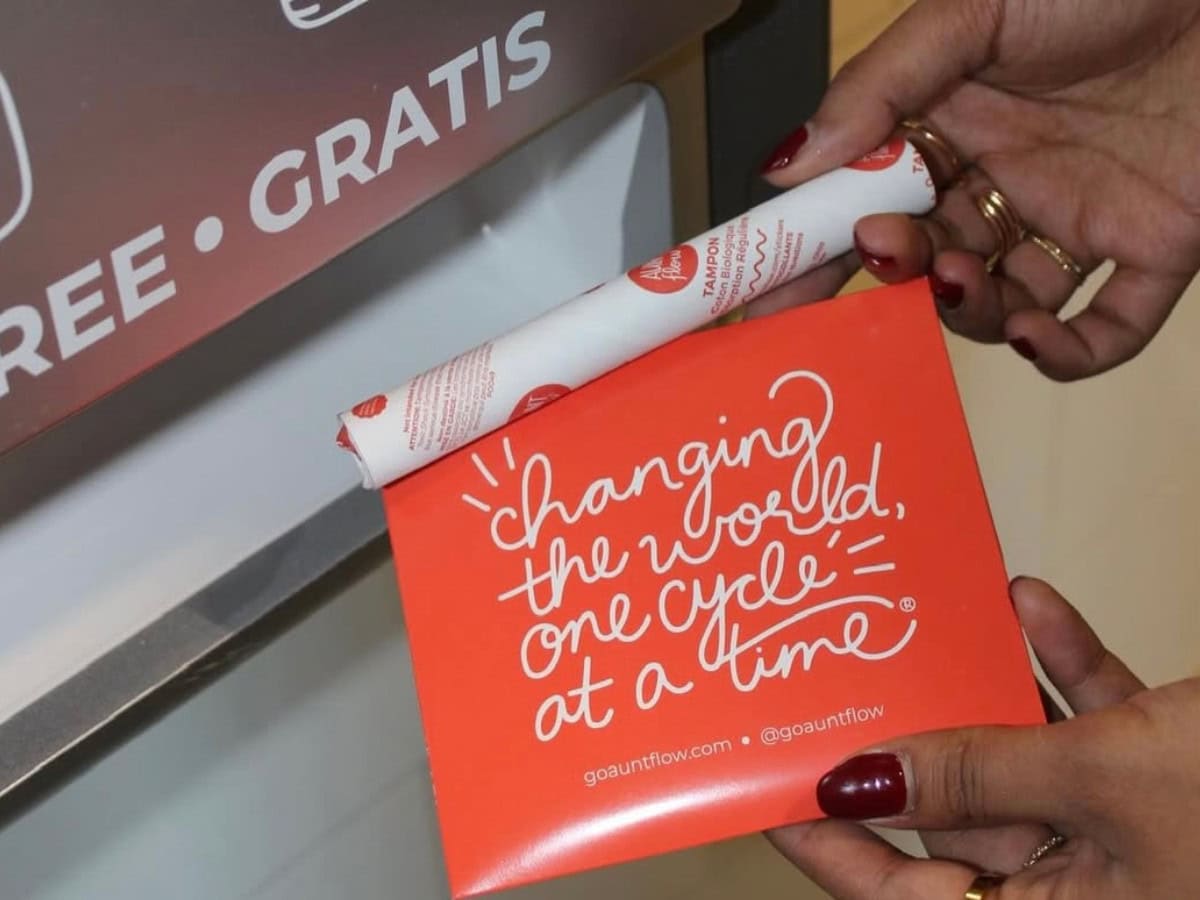
Three Tulane students have taken the lead on this issue. Eudora Ezirike, Sivaani Anandkumar, and Roma Kolluru are leading an initiative to install Aunt Flow menstrual product dispensers in campus bathrooms.
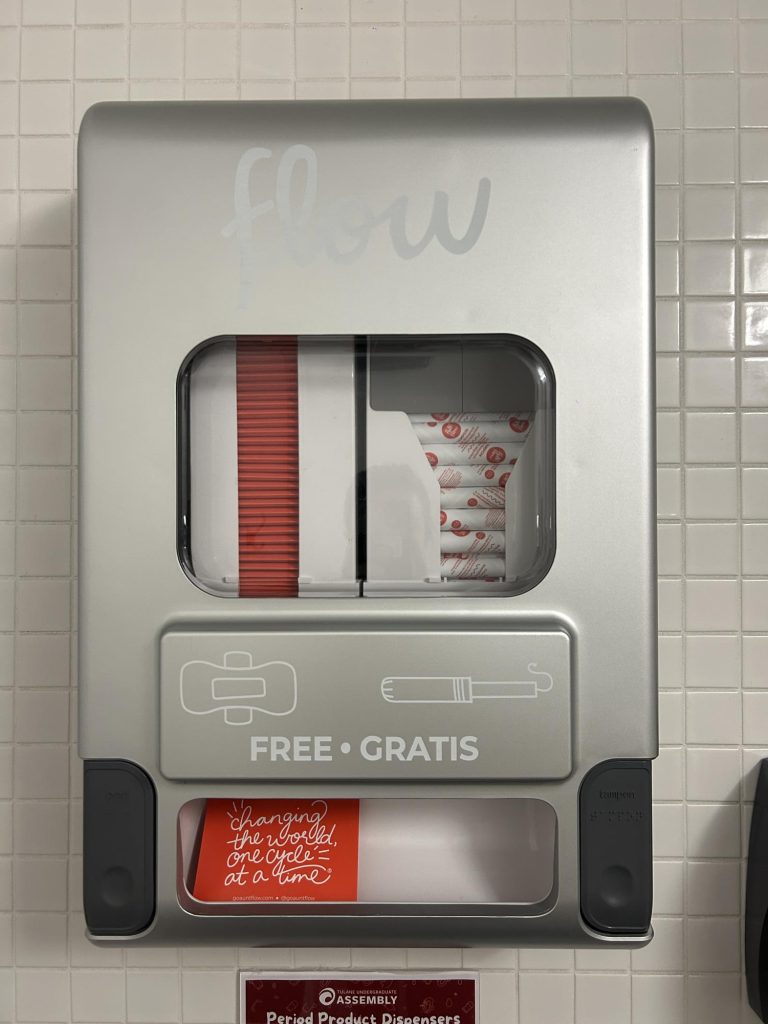
The project has been in development for two years, but the group recently coordinated with the Lavin-Bernick Center for University Life and its executive director, Heather Seamen, to install the dispensers in LBC bathrooms. The group plans to expand dispensers to the Newcomb Institute as well.
Access to menstrual products involves both health and equity. Our goal is for every single student on our campus to have equal access to the products that they need to focus on their education and overall well-being.
Eudora Ezirike
The Tulane University Peer Health Educators, also known as TUPHE, and the Well for Health Promotion provide free menstrual products at 25 campus locations. This is expanded from 19 locations last semester, with thousands of period products distributed in fall 2025, according to Evans.
Last semester, TUPHE distributed 2,919 tampons, 3,085 pads, and 1,477 liners, representing a 66.39% increase from last year.