

Reviewed by ADA Compliance Coordinator Enjie Hall
In today’s world, accessibility is not just a courtesy but a legal requirement. The Americans with Disabilities Act (ADA) ensures that individuals with disabilities have equal access to public facilities, including restrooms. While many businesses focus on obvious aspects of ADA compliance, such as ramps and grab bars, smaller details like menstrual product dispensers (a.k.a. restroom accessories) and their placement often fall through the cracks, but they are equally crucial.
Here are the top ADA considerations when selecting a period care dispenser solution for your organization:
Finding the Perfect Placement for Your Dispenser
Code 307: Proper placement of dispensers in bathrooms
Code 307 of the ADA Standards for Accessible Design outlines specific requirements for the placement of dispensers within reach ranges. It addresses the positioning of essential amenities such as soap dispensers, paper towel dispensers, and hand dryers, ensuring they are accessible to individuals with disabilities.
Code 307 dictates that “Objects with leading edges more than 27 inches (685 mm) and not more than 80 inches (2030 mm) above the finish floor or ground shall protrude 4 inches (100 mm) maximum horizontally into the circulation path.”
But most paper towel dispensers and period care dispensers are more than 4 inches deep, so how can we design with this accessibility standard in mind?
- Circulation Paths: An exterior or interior way of passage provided for pedestrian travel, including but not limited to walks, hallways, courtyards, elevators, platform lifts, ramps, stairways, and landings. Dispensers can be placed at the end of halls or in corners to ensure no obstruction.
- Floor Objects: Placing an object below a protruded dispenser can also ensure compliance. Objects could include a trash can, sink, or a skirt that extends the dispenser all the way to the floor.
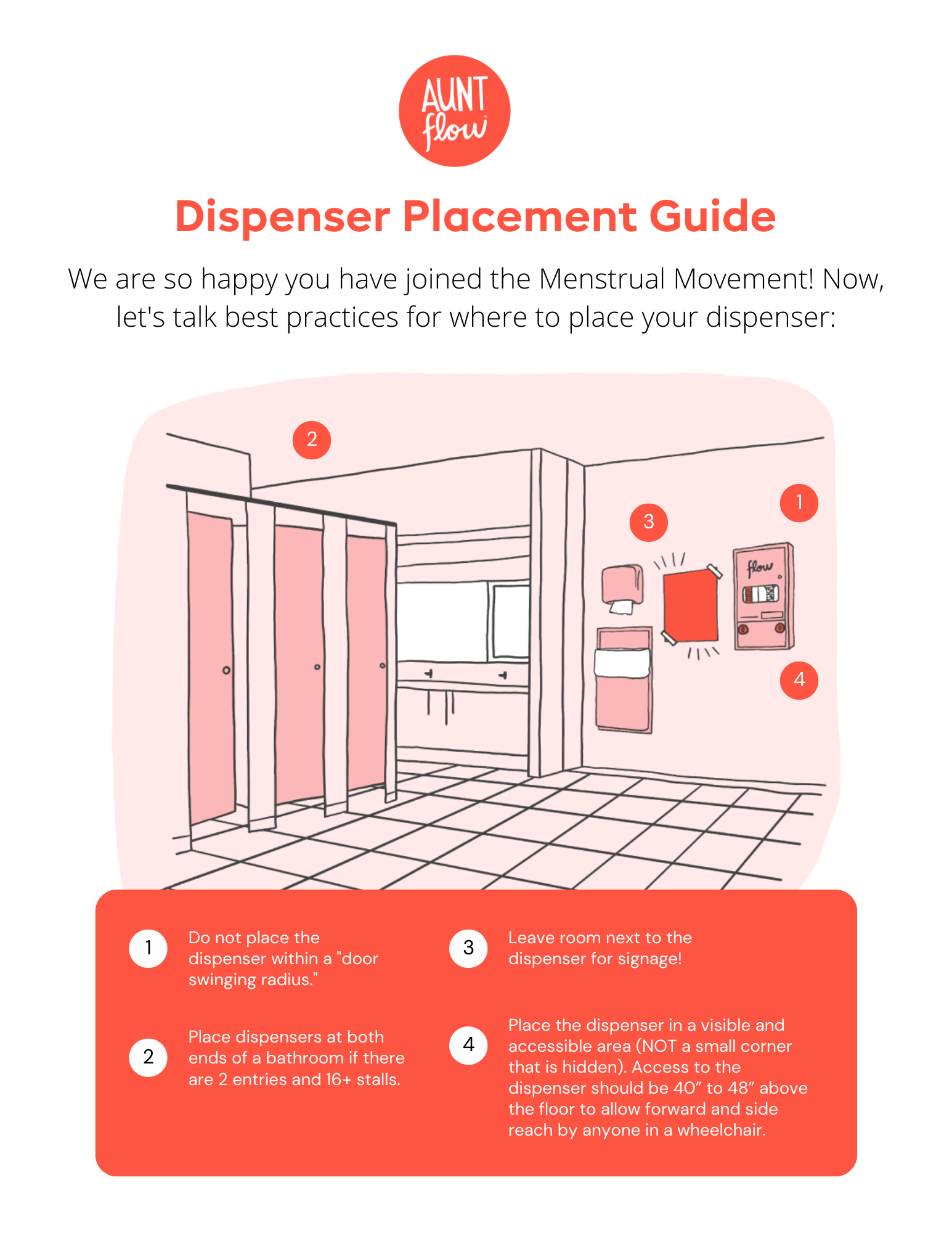
Picture Below: Recommended placement for an Aunt Flow Model E Dispenser in a bathroom.

Ensure Wheelchair-Friendly Access
Code 308: Reach Ranges, Mounting Height
Code 308 defines “reach ranges” to ensure folks operating from a wheelchair can achieve access to devices.
When mounting a dispenser, the operable buttons and trays for period products shall not be higher than 48 inches from the ground to ensure access.

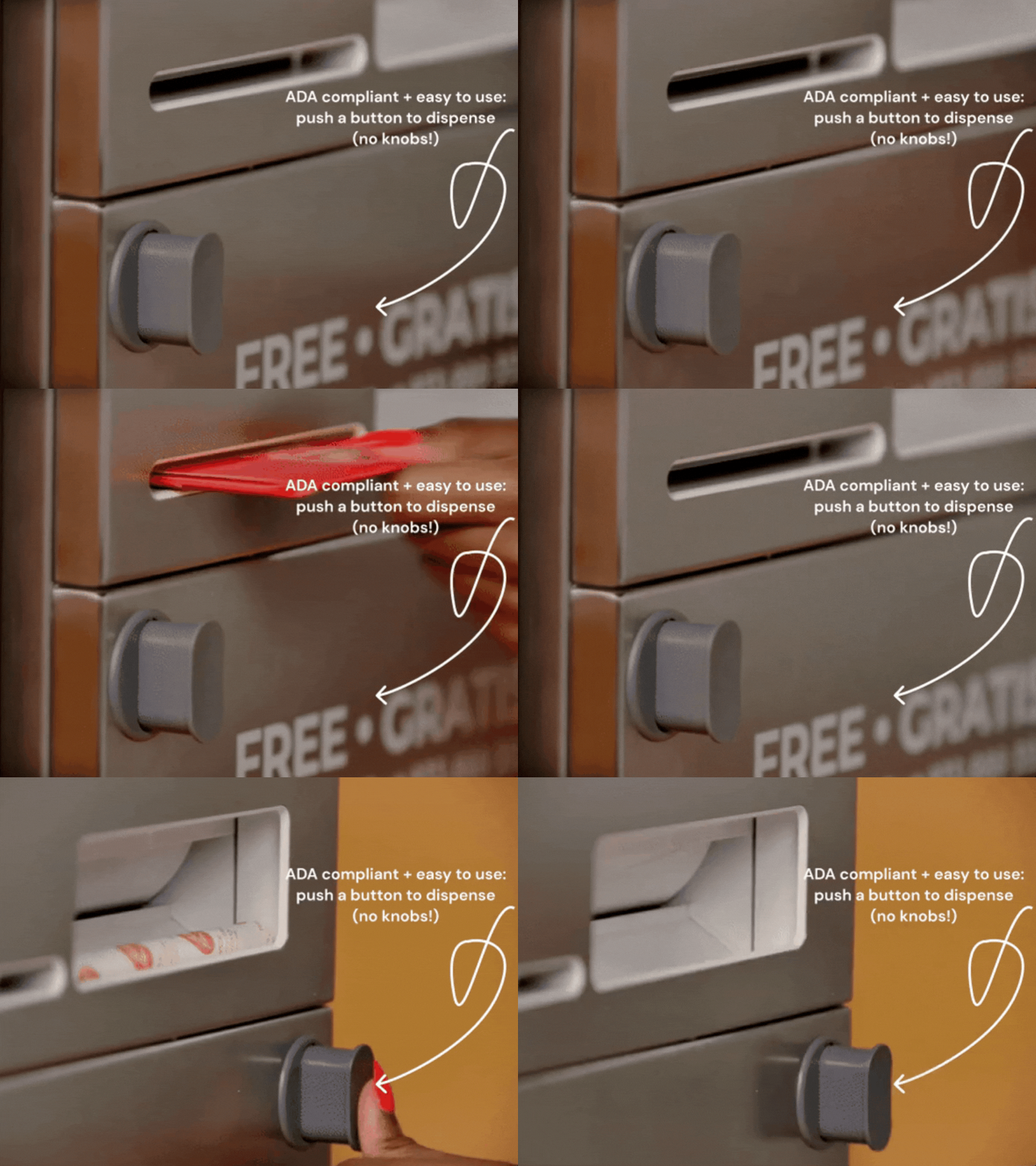
Easy-to-use Dispensing – No knobs that require twisting action!
Code 309: Operable Parts
Code 309 identifies operable parts of a dispenser to ensure all people can utilize a mechanism.
Guideline: Operable parts shall be operable with one hand and shall not require tight grasping, pinching, or twisting of the wrist. The force required to activate operable parts shall be 5 pounds (22.2 N) maximum.
The dispenser pictured below is not compliant with Code 309 as it requires wrist mobility (turning of a knob) to access the product.

Most other dispensers weren’t designed for people with disabilities to operate because they have turning knobs or require you to insert a quarter. Aunt Flow’s dispensers are free-vend and ADA-compliant, with push buttons for easy use.
Other Key Considerations for ADA-Compliant Dispenser Placement
When selecting a period care dispenser for your school or workplace, there are many factors to consider to ensure the program is thoughtfully designed. Below are other considerations for selecting a period care dispenser:
- Button Contrast: Activation buttons are more identifiable for people with low vision when the button contrasts as much as possible with their background. The Aunt Flow Model E and P dispensers are designed for high contrast with a dark gray button with a matte finish texture, contrasting with a light gray, gloss finish background.
- Braille: Include braille on or near the buttons to identify the buttons. All Aunt Flow dispensers include Braille.
- Signage: Consider including signage next to the dispenser to explain the period product program. Implement signage in multiple languages to ensure accessibility for all.
By adhering to these considerations, businesses and facilities can ensure that dispenser placement in bathrooms aligns with ADA requirements, fostering a welcoming environment for all individuals. Beyond legal compliance, prioritizing accessibility reflects a commitment to diversity, equity, and inclusion, enriching the experience for every visitor or patron. Let’s strive to create spaces where everyone feels valued and respected, starting from the most fundamental aspects, like restroom accessibility.